
An Introduction to:
Dynamic Radiometric Thermal Diagnostics and Dielectric Resonance Management Procedures
By Jon Whale
Please click to download a printable PDF file of this article to circulate (803kb): Download Now
(Note: Greek Symbols not supported by html)
All objects in the material universe emit energy, this being the reason we can detect them in the first place. Astronomers can determine the temperature and elements of distant stars by measuring the frequencies which they emit. Using a spectroscope, astronomers can split the light emitted from distant stars into individual frequencies displayed as bands of colour (the spectrum), from which they can determine the elements which the heavenly bodies are comprised of. For example, sodium is yellow at 510 million million oscillations per second or a wavelength 588 nanometres. The overall emitted colour as seen by the eye determines the surface temperature of the star, high temperature white dwarf stars emit more energy in the ultraviolet frequency band, whereas cooler yellow and red giant stars emit the bulk of their energy in the infrared frequency band.
Humans emit energy away from the body in all directions as electromagnetic waves at microwave frequencies in the infrared wave band, but this energy is not detectable by the human eye or indeed by any conventional glass optical, photographic or video camera. The number of oscillations per second for the frequency bands for ultraviolet, visible light, infrared and microwaves are so large as to be too unmanageable on paper, therefore they are always referred to as ‘the wavelength’ and this is calculated by dividing the number of oscillations per second into the speed of light which is 299,800,000 metres per second (186,284 miles per second). This calculation provides the precision length of each cycle or wave. The values for the very high frequencies instead of being recited in billions of cycles per second are for convenience always quoted as the wavelength (8) in micrometres (um) and nanometres (nm) (See Fig. 1 & 2).
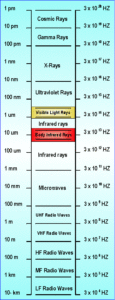
Fig. 1. The Electromagnetic Wave Spectrum, including Colour Spectrum.
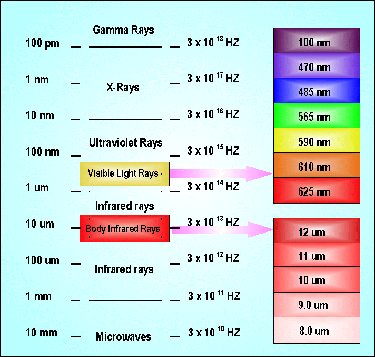
Fig. 2. The Body Microwave Infrared Emissions & the Colour Spectrum.
Amongst certain medical scientists, precision calibrated measurement of the frequencies emitted by the human body is a controversial but useful scientific aid for diagnosis and management of disease. It is scientifically called quantitative radiometric measurement or telethermometry. Furthermore, it enables medical scientists to gain a greater understanding of disease and its management. The emissions of the human body which are of concern for diagnostic purposes are within a narrow band of infrared microwave frequencies at wavelengths (^) of 8.0 to 12.0 um. Very sophisticated electronic apparatus is required to detect human frequency emissions. A portentous benefit of radiometric scanning for diagnostics is there is no physical or intrusive contact with the patient, only the microwave frequencies emitted by the patient’s body are recorded and analysed. To avoid error, the environmental conditions must be controlled. The calibration of the radiometric imaging apparatus is critical and the analyst must be ruthless about his interpretations and conclusions drawn from the data provided by the images (See Fig. 3, 4 & 5).
This Author for over thirty years has been researching and developing medical management apparatus specifically for manipulation and/or the modulation of biological energies related to disease. He has developed a large number of efficient disease management procedures which implement the scientific laws of dielectric resonance. More recently he has developed a number of precision calibrated instruments which have provided invaluable data for diagnosis and management (See Fig. 3, 4 & 5).
Please Note: Some of the lamps and scanning instruments shown in various photographs on this web page are of very early prototype instrument models taken 20 years or more back and are not of our current production models.
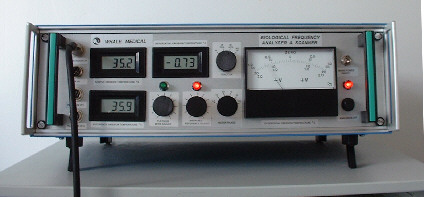

Fig 3. A precision 8.0 – 12.0 um Radiometric Scanner Apparatus. Fig 4. Hand Held Scanner.
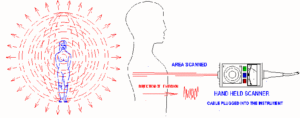
Fig 5. Schematic of scanning infrared emissions.
The Domineering Energy of Disease and Injury
Contusions, fractures, burns, carcinomas, lymphomas, melanomas, prostate cancer, dermatological diseases, rheumatoid arthritis, diabetes mellitus and associated pathology, liver disease and many other common conditions, including bacterial infections, can be accompanied with localised vasodilation, hyperthermia, hyperperfusion, hypermetabolism and or hypervascularisation: all high energy conditions with higher microwave emission often accompanied with discomfort and pain.
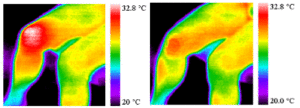
Fig 7. Radiometric Image of a knee contusion.
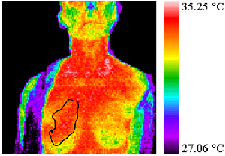
Fig 6. Breast Cancer: Radiometric Image showing hyperthermia on the right breast

Fig. 8. Infra-red scanning psoriasis can reveal biological activity of +5.0 o C. higher than unaffected skin.
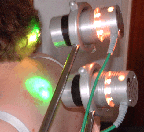
Fig. 9. Dielectric Resonance Management of psoriasis lowers biological activity down to only 0.8 o C. higher than unaffected skin -with just a single 20 minute treatment.
For example, in the case of mass vasodilated breasts provoked by breast cancer, the breast energy emissions are much high than for a healthy breast, and radiometric imaging visibly exposes the areas of malignancy providing the oncologist with additional data not visible or obtainable by X-ray mammograms. The hyperthermia can be due to hypervascularisation associated with malignancy or increased blood flow through the existing vascular structure. The hyperthermia, a product of malignant tumours, may suppress chemically the immune response towards malignant cells by inhibiting the neutrophils’ phagocytic activity. Radiometric infrared scanning of the prostate gland area where cancer is suspected or confirmed by blood analysis for prostate specific antigens etc. also reveals high levels of energy emission. Radiometric scanning of malignant melanoma likewise reveals high levels of energy emission, the hyperthermic behaviour of malignant melanoma is more likely to be caused by vasodilation than hypermetabolism (See Fig. 6).
Sub-Molecular Energy Medicine
Hyperthermia, hyperperfusion, hypermetabolism and vasodilation, are the red high temperature areas which can be seen in the radiometric image of a knee contusion (Fig 7). Radiometric imaging should not be confused with any type of photographic images, infrared microwaves cannot pass through glass. For example, PIP scanning, used by some alternative therapists, is not radiometric as it relies on a normal glass optic video camera to capture the photographic image and computer software to turn up the ‘colour hue intensity’ to 100% to create the colour distortions seen in the PIP scan images. PIP scan images cannot contain any radiometric information. Radiometric imaging is truly scientific and is derived from outer space exploration technology. It is achieved by using special germanium optics and sensitive semiconductor sensors which scan areas of the body and convert the microwave emissions into voltage values which are stored in a computer memory. The computer mathematically converts the stored voltage data into values of ‘degrees centigrade’ for each minute part of the scanned area (pixel). The image is created by the computer software assigning a specific colour hue to each of the many designated temperature values. The hue red is assigned to the hottest temperature value, next orange, then yellow, green, blue indigo and down to violet as the coldest colour. The colour pixels which make up the image represent a precision calibrated map of the temperature mathematics of the radiometric scan which medical practitioners can use to diagnose and prescribe.
Medical dictionaries quote placebo levels at 30% to 70%; a major problem for alternative therapies is providing accountable evidence that proves the value of the procedure or products used. Without such evidence and placebo levels running up to 70%, it is almost impossible to reassure the medical institution and a large percentage of the public of the efficiency of any of the alternative management procedures. Radiometric imaging is quick and cost effective, contemporary radiometric scanners take only a second or so to record and produce an image. These images provide the practitioner with real time data about their patient’s condition. Recording ‘before and after treatment’ radiometric images, provides the practitioner with scientific proof of the competence of his treatment and the progress of his patient also equipping him with substantive scientific proof for further discussion.
The Sinister Intelligence and Power of Disease
Cancer is capricious cellular behaviour. Psoriasis is unpredictable cellular reproduction of the dermis. Fortunately for the patient, unlike tumours, the accelerated reproduction of skin cells removes earlier generations of cells (layers of skin) away from their blood supply and they die, dropping off in flakes. Infra-red measurement of affected skin in contrast to adjacent unaffected skin areas can reveal temperature differences of +5.0 0 Celsius (See Fig. 8 and 9). A temperature differential of five degree Celsius is almost implausible and difficult to account for by vasodilation/hypermetabolism alone. This anomalous differential is more probably due to a combination of vasoconstriction/hypormetabolism of unaffected areas together with vasodilation/hypermetabolism of the psoriasis areas. It is as if, by some contrivance, the body or the disease appropriates biological energy from unaffected areas and diverts this biological energy to propel the psoriasis. This same ‘pull-push’ energy diversion process appears to occur with malignant tumours and it seems that disease exhibits an intelligence. For disease to progress, it requires energy which it expropriates from healthy body mass. Some insidious diseases apparently are able to create their own supportive positive oscillating energy and chemical feedback system, interrupting the energy feedback system and stimulating the aggression of the immune defence system is a conspicuous method of confounding sinister diseases and can be applied alongside orthodox management procedures.
‘Push-Pull’ Energy Management for Disease and Injury
Modern medical diagnostic procedures are both commendable and indisputably ingenious. Pathological laboratory analysis of the patient’s haematology and biochemistry is a fundamental discipline for diagnosis and management. Invariably, where there is chronic or terminal disease, it will be seen as abnormalities in the patient’s blood and urine samples. The blood counts for erythrocytes, leukocytes, lymphocytes, platelets, neutrophils etc. are likely to be outside of the normal range, as will other indicators such as the biochemistry constituents. Blood tests for prostate specific antigens, carcinogenic embryonic antigens, erythrocyte sedimentation rate, etc. are indicators for these cancers. If by some means it would be possible to artificially manipulate and re-divert the patient’s biological energy away from the disease, or modulate the biological energy of the diseased parts, then such a method would provide excellent management possibilities as well as expeditious palliative care.
Electronic design engineers are brilliant and cunning in their application of strategies and problem solving e.g. the development of the ‘Push-Pull’ thermiohmic vacuum valve power amplifier in the 1940’s has become an immortalised strategy and today, almost every manufactured electronic item uses this technique. The application of two power amplifying electronic elements in an inverse complementary mode, one ‘pushing’ and the other ‘pulling’ enables awesome amplification of power as can be experienced in any discotheque. Unlike electronic engineering, medicine is not yet a complete science, and when applied to disease management, the electronic ‘Push-Pull’ strategy can produce outstanding results unavailable elsewhere.
Everybody feels better when the sun shines. The universal principle of dielectric resonance is the sub-atomic transfer of energy between discrete body mass. This principle is used to manipulate and/or modulate cellular biological energy via a sub molecular level of valence electron modulation. Modulating electrons in living cells will adjust, increase or decrease the biological energy or life force of the cells. Whale Medical’s Lux IV is a certified EU compliance Class IIA medical apparatus, the special low voltage medical lamps are dielectric resonance transducers which induce, manipulate and/or modulate biological energy for disease management. The Lux IV has been designed and developed to produce rapid and effective results for an ultra wide range of disease management without producing any side effects. A very large percentage of presented injuries and diseases support excessive biological energy; neutralising this energy and lowering the temperature is a major management consideration as it reduces pain, shock and inflammation, assisting the healing process.
For thousand of years, balms and tablets containing beryllium aluminium silicate (emerald gem stone powder) and aluminium oxide (blue sapphire powder), have been and are indeed today being prescribed by physicians in some countries for pain, contusions, infections, dermatological conditions, digestion and gastric disease, etc.. These mineral medicines, like sand, do not dissolve and cannot be absorbed into the body’s biochemistry, they therefore function on unconventional justifications compared to biochemical medications. The dielectric resonance frequency of emerald substrates is ^ 565 nm and blue sapphire is ^ 400 nm. Lux IV medical lamps containing beryllium aluminium silicate and aluminium oxide crystalline substrates are extremely effective for reducing localised hyperthermia, hyperperfusion, hypermetabolism and vasodilation as well as dramatically attenuating pain. This type of transducer is electronically modulated at slow analgesic brainwave frequency of sleep (1.5 HZ) being employed in perhaps 90% of all presented disease or injury. The patient’s experience is always very pleasant, regardless of their presented symptoms or disease; as they receive treatment, over 90% of patients report relief from their pain, irritations, uncomfortable or distressing feelings, emotions and symptoms.
The inverse complementary management equivalent to the above procedure is Lux IV lamps containing aluminium chromium oxide (ruby, ^ 625 nm) or silicon magnesium dioxide (carnelian ^ 610 nm) together with carbon (diamond, ^ 470 nm) crystalline substrates and electronically modulated at faster brainwave frequency of alertness (16.5 HZ). This combination can rapidly and effectively reduce hypothermia, vasoconstriction, hypometabolism, increasing local temperature, circulation and biological energy. It is used for management of thrombosis, venus ulcers, phlebitis, chilblains, varicose veins, oedema and related pathology.
Serendipity plays a large role in scientific discoveries; many years back the author was impeded for an important appointment by a festive hangover. His hypothesis was to energise as much volume of his blood as quickly as possible in order to clear his head and other symptoms. Targeting his spleen with two lamp transducers containing diamond and carnelian substrates at 8.5 HZ. energised his blood which passed through the spleen to the liver and every other organ and gland, eventually reaching the body extremities. The treatment worked within 15 minutes leading him to conclude this procedure would be helpful for the management of diseases which exhibited hangover type symptoms or worse. Today, many practitioners are successfully using this procedure for the management of asthma, ME, chronic fatigue syndrome, strokes, dementia and many other conditions. The dielectric resonance management of hangovers should be discouraged, however the same and modified procedures are useful for the management of alcoholic disease and related pathology. The substitution of ruby with carnelian crystalline substrates produces a softer treatment for conditions midway between the two procedures cited above: examples are asthma, cerebral thrombosis, embolism or haemorrhage, paralysis, dementia, polymyalgia, vitiligo, muscular/ligamentous strain, adhesive capsulitis, disc prolapse, osteoarthritis, rheumatic disease, allergies and many others.
The rapid and beneficial effects of the above management procedures are scientifically supported for example, by monitoring with radiometric imaging or pathological laboratory analysis.
The discovery of targeting, increasing or decreasing and/or modulating the biological energy of internal organs and glands, improving their efficiency and performance was a quantum leap for medical science. It had become much more than just theoretically possible to adjust the haematology and biochemistry associated with sinister diseases and this was later proved with palliative management of a terminal patient with stage three lymphoma and lymphoedema. By targeting appropriately selected organs and glands, practitioners have produced many astounding satisfactory results for patients presenting a wide variety of serious complaints. Understandably, as word got around, patients with powerful terminal diseases began seeking support and in order to accommodate this compromised situation, more complex and powerful procedures were developed incorporating ‘Push-Pull’ management strategies.
A number of prostate cancer patients have been successfully managed by reducing the excessive prostate biological energy and at the same time energising the blood and spleen as outlined above. In each case, subsequent blood tests confirmed very substantial falls in the prostate specific antigen counts etc. along with a reduction of collateral symptoms. On one occasion, a blind diabetic patient’s sight was returned in five minutes by ameliorating optic nerve vasoconstriction. Auto immune disease with hepatitis, jaundice and related symptomology has been managed using simultaneous liver and spleen ‘Push-Pull’ procedures, achieved by calming and cooling the liver inflammation and raising the biological energy of the blood and cardiovascular system with treatment to the patient’s spleen area.
More recently, a youngish lady had been diagnosed with infiltrating carcinoma lying on the stomach and bowel. Over a few months her health had deteriorated, causing her to lose 22 kilograms, and the prognosis had given her just months to live. Chemotherapy was ineffective for her condition and the hospital, in her case, could not directly assist further. Paradoxically, this patient’s haematology and biochemistry were within normal range; from the many pathological tests undertaken, aside from a biopsy, there were no abnormal indicators. Weekly radiometric imaging revealed a hyperthermic area of +1.8 O C. at the liver and – 1.7 O C. at the stomach (zero referenced against the spleen) (see Fig. 11). The reasons for this atypical 3.5 O C. differential are not properly understood, but was assumed to be hepatitis and stomach vasoconstritcion and managed as such. Also, the patient’s Assemblage Point location was abnormally low, as is invariably the case for patient’s with serious disease.
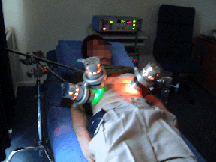
Fig 10. Simultaneous ‘Push- Pull’ Dielectric Resonance management of the liver and the spleen
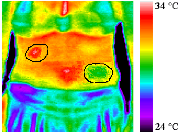
Fig. 11. Radiometric Image showing high emissions for the liver area and low for the stomach area.
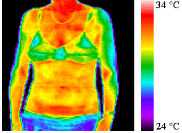
Fig. 12. Radiometric Image of the same patient after Dielectric Resonance management.
Due to the proximity of the carcinoma, the stomach could not be given the prescribed stimulating management. This dichotomy was reconciled by giving a thirty minute ‘Push-Pull’ procedure, calming and cooling the liver and stimulating the blood and spleen instead of the stomach. This was implemented to the liver to slow down her metabolic rate, reduce her blood pressure and to the spleen to raise her biological energy and lift up her low Assemblage Point location (See Fig. 10). The following week, she reported she had gained weight, was eating, sleeping, working and feeling better. However, the liver/stomach radiometric differential had only marginally improved, nevertheless, this was a turning point from her previously retrogressive predicament and over some four weeks this liver/stomach differential was moderated (see Fig.12).
For the past four months this patient has been receiving weekly or fortnightly palliative care procedures with stimulating treatment to her blood and spleen and occasionally to the thymus area. At the same time calming cooling analgesic treatment is given to the stomach and bowel area, the site of the carcinoma, in the hope of slowing down its progress so as to give the immune defence system a chance to gain the upper hand. The hypothesis of raising the biological energy of the blood and the immune defence system via treatment to the spleen (and thymus) and applying calming cooling treatment to the diseased area, at least for the time being for this patient, is paying off. It has decisively improved the patient’s health and quality of life. Only time will tell if this patient goes into remission. To be continued in future issues.
Caution. The above management procedures have been in cooperation with the patient’s doctors who have provided essential oncology, haematology, biochemistry and other pathology data. This article is for reference, not intended to diagnose, prescribe or treat without medical supervision. The information contained herein is in no way to be considered as a substitute for consultation with a professional physician.
IR Bioscanner & The Lux IV – Using The IR Bioscanner To Determine The Lux IV Treatment
High Differential Recordings: Scanned readings that show a much higher level when compared against a reference sample taken from a corresponding part of the body are significant and should be investigated further.
Readings greater than perhaps +1.5 o C. may indicate localised hypermetabolism, vasodilation, infection or perhaps vascularisation. When the cause of the inflammation is supported by reported symptoms and patient’s history, for example, contusions, fracture, post surgery trauma, injury infections, dermatitis, eczema, psoriasis or burns, then the treatment using the Lux IV will almost certainly be a green lamp filled with emeralds and dark sapphires. This applies to acute and chronic conditions with high readings.
In the case where only a relatively small positive reading is observed and is accompanied with pain but little inflammation, then the treatment would be a violet lamp filled with dark sapphire only or perhaps a reduced number of emeralds. Emerald is specific for cooling and reduces hypermetabolism, vasodilation whereas dark sapphire is specific for pain, being an analgesic, antispasmodic, muscle relaxant and reduces hypertension. This type of situation often relates to chronic or old traumas that have been largely physically repaired with the passing of time but still exhibit neuropathy of one sort or another..
The Lux IV should be set to pulse the lamps with a slow calming frequency of Delta. – 1.5Hz. When the human body is asleep or anaesthetised, the brain frequency is uniformly at around 1.5Hz. When the Delta brainwave frequency is applied in conjunction with dark sapphire, together they induce a profound relaxed and anaesthetised feeling in the area targeted.
Lux IV medical lamps containing beryllium aluminium silicate and aluminium oxide crystalline substrates are extremely effective for reducing localised hyperthermia, hyperperfusion, hypermetabolism and vasodilation as well as dramatically attenuating pain. This type of transducer is electronically modulated at slow analgesic brainwave frequency of sleep (1.5 HZ). They are employed in perhaps 90% of all presented disease or injury. The patient’s experience is always very pleasant, regardless of their presented symptoms or disease, as they receive treatment, over 90% of patients report relief from their pain, irritations, uncomfortable or distressing feelings, emotions and symptoms.
Low Differential Recordings: Low differential readings are not as common as high readings. Low readings can indicate local vasoconstriction, capillary constriction, hypothermia, hypometabolism, limb paralysis, neuropathy, nerve damage, post injury or infection trauma, oedema, low blood pressure, thrombosis and so on. These conditions are more common in older patients, often involving diabetes, ischaemia, thrombosis, strokes, dementia, low cardiovascular performance, leg ulcers, and/or immobility. Recording of up to -1.5 to – 2.0 oC. require a stimulating invigorating treatment to counteract the low biological energy. Where low readings are present, the patient is more likely to suffer chronic or iatrogenic disease.
Lux IV treatment for all of these conditions, at one level or another will require the use of diamonds and carnelians with an orange filter. A faster stimulating treatment frequency equivalent to Alpha around 7.0 – 8.5 Hz or perhaps even Beta brain frequencies 16 – 25 Hz.
Very Low Differential Readings: Lux IV lamps containing aluminium chromium oxide (ruby, 625 nm) or silicon magnesium dioxide (carnelian 610 nm) together with carbon (diamond, 470 nm) crystalline substrates and electronically modulated at faster brainwave frequency of alertness (16.5 HZ). This combination can rapidly and effectively reduce hypothermia, vasoconstriction, hypometabolism, increasing local temperature, circulation and biological energy.